
Driving is an incredibly useful life skill, giving you the freedom and flexibility to go where you want, when you want. However, learning can be physically, mentally and emotionally challenging, and it can take years to become competent and even longer to feel fully in control.
Research suggests that 82% of drivers feel fairly safe on the road; however, road accident data paints a different picture, with the number of fatal incidents increasing in 2024. This is why building genuine confidence with safety in mind matters.
If you’re finding being behind the wheel difficult, try these tactics to build up your confidence.
Mastering the basics over time
Confidence doesn’t come overnight; it grows slowly as you improve your skills. Even drivers who have had plenty of years of experience admit they don’t think they’d pass their test again without the help of certain technologies.

Breaking down the basics and repeating these little and often will support your muscle memory, so driving feels second nature and helps you feel more in control of the car as you advance to more challenging situations.
Begin in low-traffic areas like car parks and residential streets, practising ‘mirror, signal, manoeuvre’ and essential parking techniques. Test your brakes to calculate the correct amount of pressure for smooth slowing down and the all-important emergency stop. Practise going through your gears without stalling. Once you feel ready to go out on the roads, commit to short, frequent drives to reinforce your core skills and prove your ability to yourself.
Developing defensive driving techniques
Anticipating and responding to the actions of others on the road in plenty of time will help you feel calmer and more confident: enter, defensive driving. This proactive driving style involves looking further ahead and constantly scanning for hazards, so you can spot challenges as soon as possible. Having greater awareness of the road and plenty of time to respond means you’re always prepared for any situation.
Consciously keep a safe distance from the car in front, slowing with them to avoid getting too close. Avoid distractions like loud music or interacting with passengers to help you stay alert. Keep your eyes fixed as far ahead as possible so you spot problems as soon as possible. You’ll soon feel comfortable identifying and reacting to hazards, for confidence even in unpredictable circumstances.
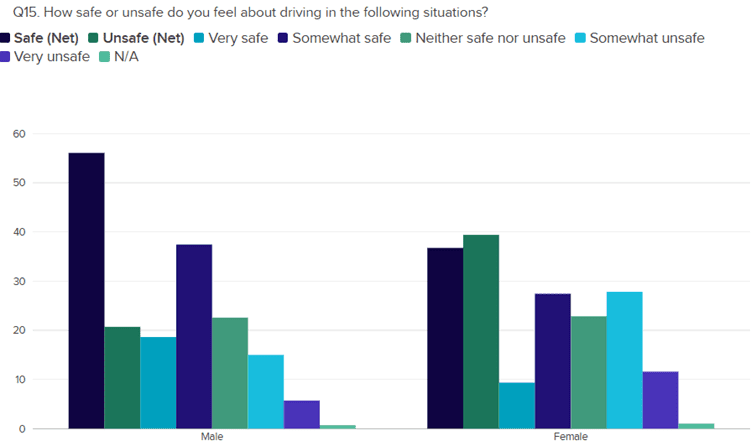
Defensive driving is particularly important, as being overly confident can lead to a higher risk of accidents. For example, National Accident Helpline found that male drivers feel safer than women when driving in poor weather, yet they account for 76% of all road fatalities.
Understanding legal guidelines
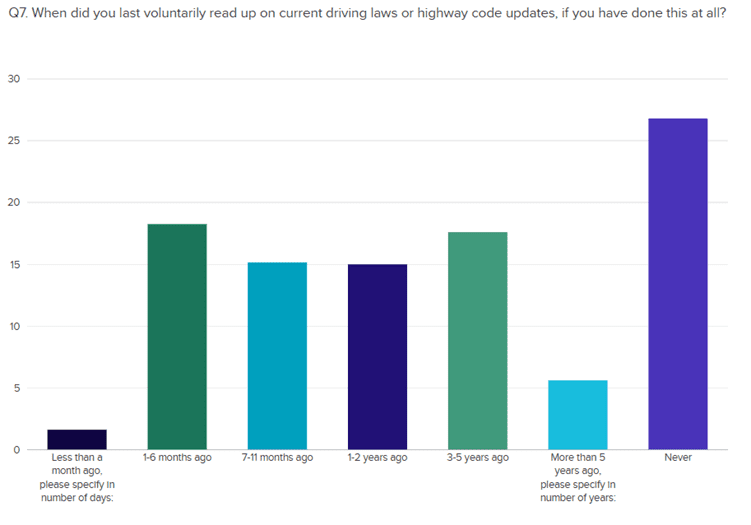
Knowing your legal responsibilities is essential to promoting safety on the road. This is why it’s best to do your theory test before or alongside physical practice, so you have an understanding of the Highway Code and can correctly interpret signs while driving. Keeping up to date with any changes to the Highway Code is also vital. Despite 84% of drivers understanding their responsibility to do so, less than a third actually do. It’s a legal requirement that also boosts your confidence when on the road.
Remember that you must have car insurance to get behind the wheel in the UK, and you must perform an annual MOT test to ensure your vehicle is roadworthy. You should also know what to do in the event of an accident, including how to report it, your right to financial compensation if you’re not responsible for the collision and how to interact with other road users involved. This will help you stay calm should you get into trouble while driving.
Maintaining a positive mindset
Driving is as much a mental game as it is a physical one. If you allow fear or self-doubt to dominate your thoughts, it’s easy to feel overwhelmed, and one easily rectified mistake could trigger a series of mistakes and a full-blown disaster.
While women and younger motorists admit their faults more often, they may actually be safer. It’s important not to be overconfident about your abilities, since this can negatively affect your driving.
Instead of focusing on worst-case scenarios, reframe your thoughts, reminding yourself that everyone makes mistakes and it’s a natural part of the learning process. Set small, achievable goals and celebrate those victories to help cement your self-confidence. Actively finding ways to reduce stress before and after lessons can help you go into driving more rested and relaxed, for better results in all situations.
Collaborative post


